ShareThis

This website is an online environmental resource for kids to find ideas, information, and inspiration to go green.

Join My Mailing List!


Well said...

"If I had influence with the good fairy who is supposed to preside over the christening of all children, I should ask that her gift to each child in the world be a sense of wonder so indestructible that it would last throughout life." Rachel Carson


Visit My Shop

Redwoods by Jason Chin

“Stunning... inventive... eye-opening...”
-Kirkus Reviews

REDWOODS
by Jason Chin

RedwoodsBook.com

email me for advertising rates
Showing posts with label wildlife. Show all posts

Thursday, April 22, 2010

Happy Birthday Earth Day and Green Up Day!


Happy Earth Day!! Not only is today is the 40th anniversary of Earth Day, it's also the 40th anniversary of Green Up Day in Vermont. Green Up Day takes place on the first Saturday in May across the state of Vermont. Kids and adults alike gather in their communities to clean up liter. If you have ever visited Vermont, you will notice right away the impact this one day of action has. Not only do the roads, sidewalks, streams and trails get a facelift, but new generations learn the importance of keeping our environment clean. As a kid, I participated in Green Up Day with my classmates every year. I learned the importance not only of putting trash in the garbage can, but also the how important it is to recycle and to reduce the amount of trash we create. While scanning the ground, bushes and ravines for trash, I began to notice how our garbage impacts the habitats of small creatures in my community. Suddenly one day of action turned into a year-long effort to reduce trash, recycle and protect the natural habitats in my town.

If you live in Vermont, you can participate in Green Up Day on Saturday, May 1st. If you live elsewhere in the country or world, why not start your own Green Up Day? All you have to do is gather a friend or two, a parent or teacher and get greening!

Tuesday, January 26, 2010

Wisdom of the Wild


Anybody that has ever had a pet understands that there is a sacred bond between human beings and animals. Although we may think of ourselves as the most intelligent creatures on Earth, there is much we can learn from from the animal kingdom. Wisdom of the Wild is a terrific PBS documentary that sheds some light on our remarkable connection with our fellow creatures, including what they can teach us about the world, and about ourselves.

Click here to view the full documentary: Video: Full Episode - Wisdom of the Wild | Nature

Wednesday, January 6, 2010

The living reef...Here today, gone tomorrow?


Coral reefs are home to the greatest diversity of life on Earth. They protect our shores, contribute to our food chain, and provide us with medicines to keep us alive and healthy. Despite how important the coral reefs are to life on Earth, they maybe gone in less than 30 years due to global warming, over fishing, and the acidification of the oceans.

The reefs need your help! Read NOAA's 25 Things You Can Do to learn how you can help the reef.

Wednesday, October 14, 2009

Big Ideas for a Small Planet


Did you know that there are dogs working to save wildlife? Watch the video to find out how, and visit Sundance Channel's The Green to see what other amazing things people, and animals, are doing to protect the planet.

Tuesday, October 13, 2009

Nature Detective


Hey Kids!

Did you know that we share our homes and yards with many creatures…other than your little brother? From tiny spiders to foxes, creatures live all around us, even if we can’t always see them. Sometimes we just have to use our sleuthing skills to find the evidence.

Can you spy any of these signs of wildlife?

-A nest

-A feather

-A spiderweb

-A nibbled leaf

-A shed exoskeleton

-Animal tracks in the snow, dirt or sand

-A burrow entrance

And now, try to spy the things a creatures needs to survive:

-Nuts, seeds and berries

-Pollen for bees

-Tall grasses, brush and trees to hide and nest in

-A source of water

With the evidence you find, can you make up a story about one specific creature’s day?

This post originally appeared on the Little Green Blog.

Friday, August 21, 2009

Spread the word...with pictures

I am always trying to figure out the best way to get out the message about the consequences of global warming. As an artist, sometimes I find that images speak much louder than words. How do you spread the message, especially to people don't seem to care? Do you make pictures, or write poems? Share them with your fellow Green Guide for Kids readers!

Monday, August 10, 2009

A new book about being a vegetarian


Ruby Roth's new children's book "That's Why We Don't Eat Animals" tackles some difficult questions and concerns about eating meat. If you or your child are considering becoming a vegetarian or vegan, this book will certainly help to persuade you. It covers some difficult topics without being gory or scary. Visit the book's website to learn more about the book, and the author!

Sunday, April 26, 2009

Meet Tim Magner, Part 2


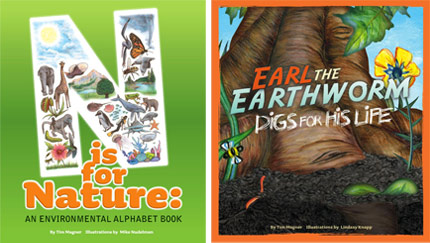
We are back with more questions for author Tim Magner, about two more of his books for young readers: N IS FOR NATURE: AN ENVIRONMENTAL ALPHABET BOOK and EARL THE EARTHWORM DIGS FOR HIS LIFE.

Both of these books aim to teach kids about many of the creatures we share our planet with, even the microscopic ones burrowing right under our feet! In your opinion, why is important that kids learn how other creatures live?

Since the beginning of human history, kids played outside. As part of every normal childhood, kids had plenty of time to wander, investigate and discover. Digging in the dirt and imitating animals gives them a chance to bond with the earth around us. Toddlers can identify with animals (especially young ones) and they grow into explorers who come to understand the connections and see us as a part of nature. Sometimes it's important to remember our roots.

EARL THE EARTHWORM DIGS FOR HIS LIFE teaches us about the amazing work of worms and how we can use them to create compost from our organic waste. Is this something that even city kids can do?

Our Earl story is entertaining in and of itself, but it's also about how, in nature, waste equals food. I love visiting schools and bringing some of my worms. Many of the city kids have never felt worms and can't believe I keep 1,000-plus of them in my kitchen. Vermi-composting is a way to explain nutrient flows and cycles. I'm a big proponent of the benefits of systems thinking over linear thinking and using nature as a model to help us move past the short-term thinking of the Industrial Revolution to a better future.

Your books really encourage kids to get outside and play. What was your favorite game to play outside when you were a kid?

We lived near a golf course and my brothers and I hunted for golf balls in the creeks and ponds. We came home well after sunset, covered in mud. Mom yelled at us. We also got to spend chunks of time in Wisconsin where we played with neighborhood kids, games like kick the can and flashlight tag. Good clean fun means getting dirty.

Friday, March 20, 2009

Meet Jason Chin, REDWOODS author and illustrator, part 3


Green Guide for Kids: Why do Redwood trees grow only in the Northwest of the U.S.?

Jason Chin:
Redwoods can actually grow in many places, but the tallest and oldest trees grow in the northwest United States, because the climate there is best for them. To grow tall redwoods need a lot of water, and that area of the country gets a lot of rain--in fact the coast redwood forests are rain forests.

GGFK: Are the redwoods endangered?

JC: Redwood forests aren't on the US government's endangered species list, but there are far fewer redwoods in the United States than there were a century ago. The main threat is logging. There used to be about 2 million acres of coast redwood forest in the US, but 95% of that has been cut down. Today, less than 106,000 acres of the original forest remain. Some of that original forest has been replaced a second generation of trees. An important distinction must be made between old-growth and second generation forests. Old-growth forests are the ones that we normally think of when we think of redwoods -- they are home to the tallest, most impressive redwoods. It will take thousands of years before the second generation forests that began this century to reach their height.


GGFK: Are their any species that live only in the Redwood forests?

JC: There are a number of species that live only in old-growth forests. The spotted owl and marbled murrelet only nest in old-growth trees (both old-growth redwoods and douglas firs). These two species are endangered, since there are so few old-growth forests left and it take so long for new forests to grow back.


GGFK: What can we do to protect them and where can we learn more?

JC: There are many organizations dedicated to the preservations of old-growth redwood forests. One of the oldest and most respected is Save the Redwoods League, founded in 1918. Their website has a wealth of resources for kids and adults about redwoods including educational resources.

Thursday, February 5, 2009

Pennies for the Planet


What do colorful seabirds on a rocky island off the coast of Maine, an ancient swamp in South Carolina and a vast sagebrush habitat in Wyoming have in common? They all need your help! Pennies for the Planet is making it not only possible, but easy for you and your friends to to make a real contribution to help conserve these threatened creatures and habitats.

Pennies for the Planet is a nationwide campaign that taps into the amazing power of kids to help critical conservation projects. Working in their classrooms, clubs, scout troops and other groups, kids have been collecting pocket change to help save wild species and wild spaces.

Visit their website makes it easy to get involved with a downloadable educational kit, containing a poster, an educator’s guide, four reproducible activities, a newsletter for kids, and a participation form.

Monday, June 9, 2008

National Get Outdoors Day


This Saturday June 14th is National Get Outdoors Day. If you and your family spend a lot of time outside then you know how great it is to spend the day, or even a few hours, exploring, digging, hiking, running or climbing in nature. But if going outside is a rare event for you and your family, this Saturday is a great opportunity to get back to nature. The event will be celebrated at more than 54 locations across the US.

Visit Green Hour, to learn more about National Get Outdoors Day, as well as learning more about spending an hour outside everyday.

Tuesday, March 18, 2008

Bug–Off Bugs! Gardening without Pesticides

ladybugs
Whether you think bugs are icky or cool, they are total pests when they eat our plants. Most of the food you buy at the supermarket is grown using pesticides to keep bugs at bay. Pesticides are chemicals that kill insects, weeds, rodents, fungi and other creatures. But there are many helpful creatures that we want to keep around because they pollinate flowers, eat the pests that damage crops, help recycle nutrients by eating dead plants and animals, and aerate the soil by digging and burrowing. Pesticides are also very toxic for your health. Luckily there are ways to scare off pests without hurting yourself or the environment.

Here’s what you can do:
–Clear your garden of weeds and dead plants, which are breeding grounds for insects.
–Plant a variety of vegetables and rotate your crops every year. Pests are often attracted to specific plants, so when planting is mixed pests are less likely to spread throughout a crop.
–Water your garden early in the day so that plants are dry for most of the day. Wet foliage encourages insects and fungus.
–Attract beneficial pest–eating bugs to your garden buy planting flowers such as cosmos, sunflowers, sweet alyssum, corn cockle and marigolds. Marigolds also have a strong stench that deters pests.
–Plant an herb garden. Some good pest–warriors are coriander, dill, caraway chervil, fennel, and parsley.

And when all else fails, you can concoct your very own homemade bug spray. Here’s the recipe:
– Mix one tablespoon of liquid dishwashing soap with one cup of vegetable oil.
– When you are ready to spray, combine one or two teaspoons of the mixture with a cup of water in a spray bottle and shake well.
– Spray the infected plants, but be cautious not to spray when the weather is too hot, as vegetable oil can burn plants in hot weather.

Wednesday, March 5, 2008

Worms in my kitchen!?!?!
Composting when you don't have a backyard


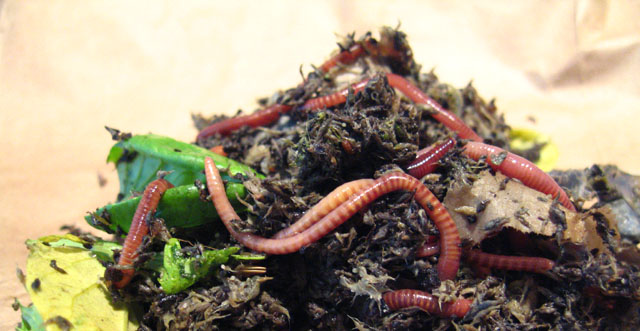
Ordinarily it would be pretty hard to convince your parents to allow you to keep worms in your kitchen, but Vermicomposting is a great way to make compost that the whole family can get excited about. Worms make compost by eating then casting (what you and I refer to as pooping) organic matter that is very high in nutrients and free of bacteria. If you are lacking in outdoor space or just like playing with worms, this effective way of composting is a great alternative. To learn more about composting with worms, get a book from your library or search online for how–to's, such as this kitchen-composting guide.

Friday, February 8, 2008

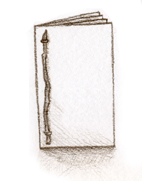
The Nature Journal


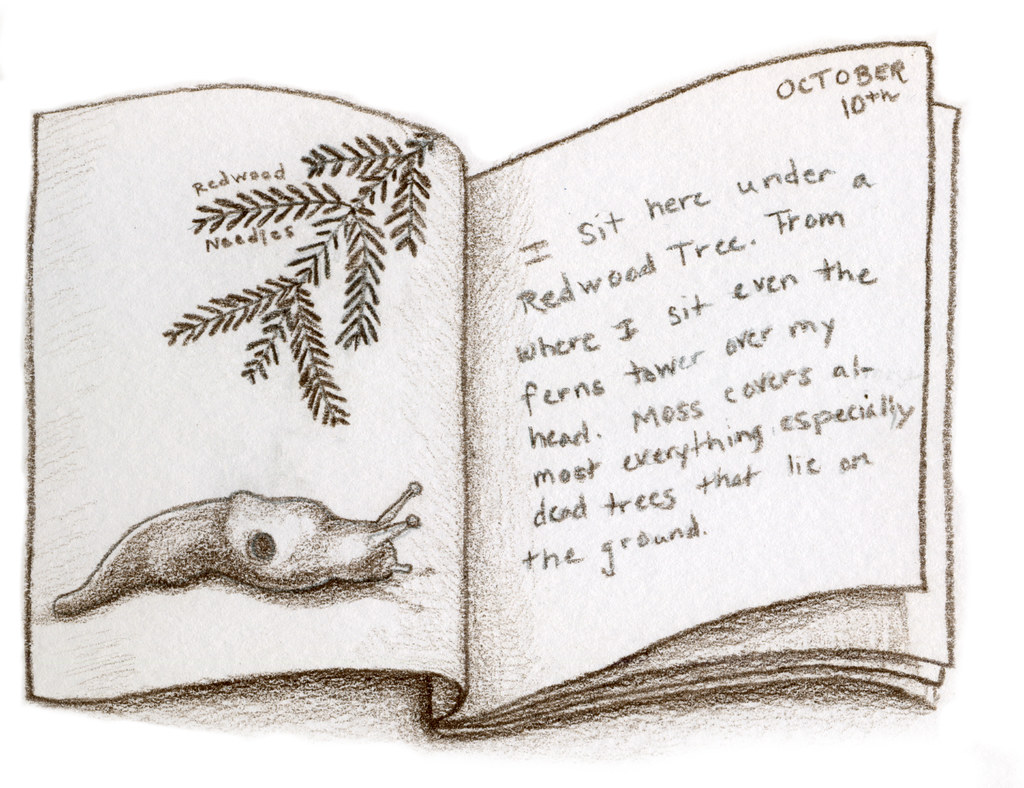
A nature journal is a notebook or sketchbook that you record your observations and thoughts in when you are in nature. Find a natural place outside to explore. Sit quietly and let all your senses awaken to the world around you. Imagine that you are experiencing this environment for the first time and record in words and pictures what you see, hear, smell and feel. You can write a poem or describe in detail a single plant. If questions pop into your head write them down, too. Notice the similarities and the differences between things. Imagine how all the living things around you, from the worm deep beneath the ground to the tree that reaches many feet into the sky, are connected. Think about how each one affects you, and how you affect them.

Make your own Nature Journal from recycled items from around the house!

You’ll need:

– Scrap paper that is all the same size
– A piece of colored paper or any paper you would like to use as a cover
– A stick about 7 or 8 inches long
– A rubber band that is long enough to stretch the length of the stick
– A hole punch

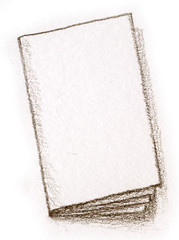
1) Place one piece of paper blank side up on top of another piece with the blank side facing down

2) Glue, staple or tape the two pieces together. Repeat this a few more times until you have a nice stack of paper.


3) Gather all the paper together in a pile with the colored cover piece on top. Fold the papers in half.

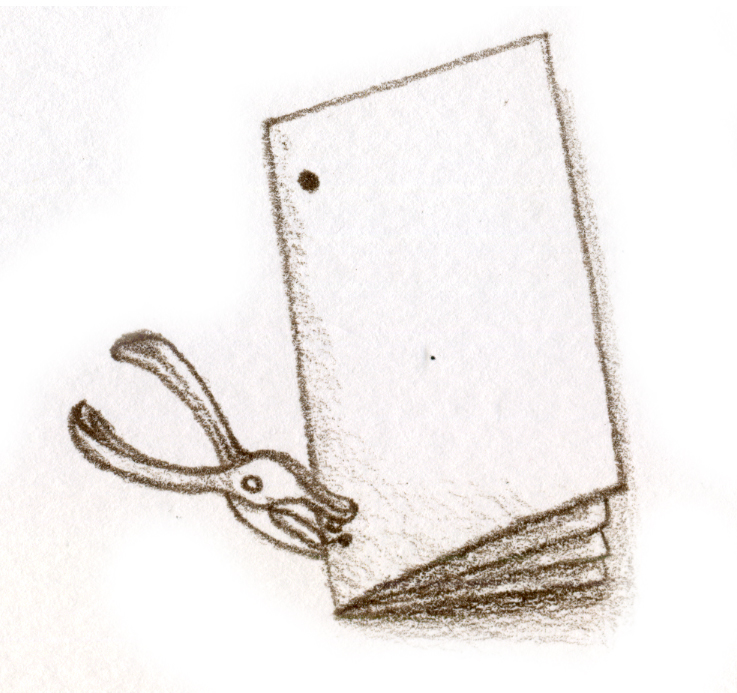
4) Use the hole punch to punch two holes 1/4” from the folded edge and 1 1/2” from the top and bottom.

5) Through the back of the book, thread one end of the rubber band through the top hole and insert the stick into the loop.

6) Thread the other end of the rubber band through the bottom hole and insert the stick into the loop.

Tip: You can attach a plastic ziplock bag to the back of your journal to collect things you find while exploring.

Monday, August 20, 2007

Go take a hike!

parkman_mt

While visiting Acadia National Park on Mt. Desert Island, Maine, I have been enjoying the seemingly endless number of hiking trails on the island. I have gone on 5 hikes in 5 days. (Disclaimer: some were more like picnics in the woods, but others were so long that it all averages out!) I have 2 days left on the island, and I hope to do 2 more hikes. Being a country girl, living in the city, being anywhere near nature is such a thrill for me.

With the summer days winding down and cool fall days just ahead, now is a prime hiking time. Hiking can be as simple as strolling in the woods or as rigorous as scaling a mountain top. All across the country, thousands of beautiful, secluded trails are ready and waiting to be explored. When you step away from the daily sights and sounds of your life and into the woods, the desert, or the field, you will begin to notice the incredible diversity of life we have on our planet. Hiking is a fantastic way to strengthen your relationship with nature, and a rousing reminder of what is at stake if we don't take care of the environment.

acadia_trail

For a helpful guide to hiking and information on taking a volunteer hiking vacation visit americanhiking.org. This website also has a great
guide to trails across the U.S.
Visit abc-of-hiking.com for a beginners guide to hiking.

medusa

We need the tonic of wildness…We can never have enough of nature…We need to witness our own limits transgressed, and some life pasturing freely where we never wander.

Henry David Thoreau from Walden Pond

Friday, August 17, 2007

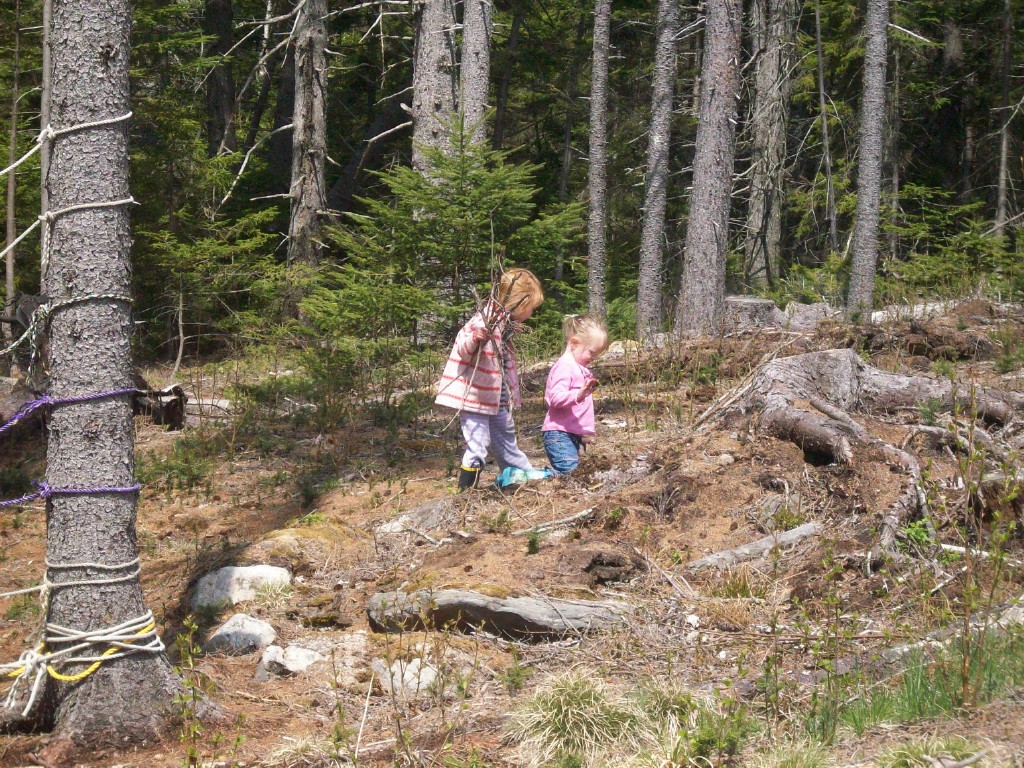
Create a backyard habitat

toad_abode_blog

Growing a backyard habitat can do many wonderful things for the environment besides halting the use of a polluting lawnmower. You can plant a variety of native trees, bushes and wildflowers that have evolved to live in your area and require virtually no maintenance. Trees grow deep roots that prevent soil from eroding and also conserve water. Your habitat will encourage beautiful birds, butterflies, insects and other wildlife to your yard. Because so many animals are crowded out of their natural habitats by buildings and roads, your backyard will become an important sanctuary for them to thrive in. Wildlife need food, water and shelter to survive. When you plant native trees, bushes and flowers, you have already begun to provide food and shelter.

Here are some more helpful tips to attract creatures to your yard:

–Put out a birdbath. Make sure to change the water in the birdbath every other day so that it doesn’t turn into mosquitoville! Every few days scrub it with a stiff brush or pinecone and rinse it well.

–Choose plants that flower and produce fruit at different times of the year so that creatures will have food to eat year–round.

–Provide shelter by placing logs, brushes and rocks in your habitat.

This is a great opportunity to create a nature journal to record the exciting changes that you will see as your habitat begins to grow and attract creatures!

Activity: The Toad Abode

Get a medium-size clay pot and saucer. Fill the saucer with water and put it on the ground. Close by, put the pot upside-down with one edge propped up with a rock. This will give the toad enough room to fit inside his cozy “abode”. If you can find a broken pot that is missing a chunk then there will be no need to prop it up—all the better!

For more information on backyard habitats, visit the National Wildlife Federation website on gardening for wildlife and click here to watch clips from Animal Planet's show Backyard Habitat.

Friday, July 27, 2007

Recycle, for gorillas' sake!


While visiting the Bronx Zoo yesterday I went to the Congo Gorilla Forest, a great exhibit with more than 20 western lowland gorillas. Outside the exhibit I noticed a recepticle and a sign asking people to recycle their old cell phones. You are probably wondering, what does my cell phone have to do with gorillas? Unfortunately, according to National Geographic News, it has a lot to do with it. Many electronic devices, including ipods, most computers, dvd players and game consoles, contain coltan, a mineral that is extracted from the forests of Congo in central Africa. These forests are the home to the endangered lowland gorillas. In recent years Congo's coltan mining has gotten out of control and has led to a dramatic loss of animal habitat and a 70% population decline of gorillas. More than 10,000 illegal miners have come to dig for coltan in protected parks in cental Africa, killing gorillas and elephants for the bush-meat trade (the hunting of wild animals for food.)

But thanks to Eco-cell, which runs a recycling program at 46 different zoos, we can recycle old cellphones and be a part of the solution. Click here to find where to go in your area to recycle your old cell phones. For more information on the Congo and a list of products that contain coltan, visit The Friends of the Congo website.