credit: Design*Sponge
ShareThis
This website is an online environmental resource for kids to find ideas, information, and inspiration to go green.
Facebook Badge
Join My Mailing List!
Well said...
"If I had influence with the good fairy who is supposed to preside over the christening of all children, I should ask that her gift to each child in the world be a sense of wonder so indestructible that it would last throughout life." Rachel Carson
Showing posts with label sustainable products. Show all posts
Friday, May 14, 2010
Biodegradable and compostable picnic disposables
Labels:
compost,
recycling,
solutions,
sustainable products
Thursday, December 10, 2009
Oh, Christmas Tree!

Over at the Little Green Blog we are discussing green Christmas trees! And by green I mean eco-green!
"Nothing says Christmas like a beautiful tree covered in chemicals, right? Wrong! Sadly, many trees, that timeless symbol of Christmas, are dangerous to your child’s health." read more
Monday, November 30, 2009
Is it green? Find out just how eco-friendly your favorite brands are
Ever wonder how eco-friendly your sneakers are? Or if GE is really as green as their ads will have you believe? Around the holidays we are faced with the tough dilemma of wanting to give great gifts and not wanting to cause harm to the planet with the products we buy. ClimateCounts.org is a great database where you can search common brands and companies and learn about their environmental impact. We have a lot of power as consumers to demand sustainably made products!
Monday, November 9, 2009
Have an Eco-birthday

Green Kid Parties in Atlanta, Georgia host eco-friendly birthday parties where kids do green crafts and munch on organic pizza and drinks. What a great way to have a fun birthday party without all the needless waste and unhealthy food!
Click here for more tips on throwing an eco-party.
Labels:
activities,
crafts,
green kids,
sustainable products
Friday, October 30, 2009
Recycling 101 and America Recycles Day
The 3 R's: Reduce, Reuse, Recycle
We’ve all heard this catchy phrase. The last R, recycling, tends to get all the credit. Reducing and Reusing, however, are even more important. If you can reduce the materials you consume you will not only create less waste, you also won’t need to worry about what to do with all the things that you buy when you are done with them. Reuse is a great way to make the most of the things that you do buy. Once you no longer need or want something, pass it on! One man’s trash is another man’s treasure. Buying or trading vintage, refurbished and used items is a fun way to get cool stuff while preventing pollution and saving the earth’s precious resources.
You can recycle up to 84% of your trash simply by taking it out of the garbage can and putting it in the recycling bin. Items made from recycled materials take far less energy and create only a fraction of the pollution to produce than items made from brand new materials. And of course, imagine the natural resources that are saved!
– Avoid buying things that use excessive packaging and buy in bulk.
– Buy durable things that will last a long time
– When things break, see if they can be fixed before throwing them away.
– Wash and reuse plastic cups, utensils and bags.
– Precycle by buying products whose packaging can be recycled
– And always bring your own bag! If you are just buying a few things just carry them in your hands.
– Complete the cycle and buy products made from recycled materials. When you buy products made from post-consumer recycled materials you are helping to reduce carbon emissions and saving resources.
– Americans throw away about 40 billion soft drink cans and bottles every year. Placed end to end, they would reach to the moon and back nearly 20 times. Recycling an aluminum soda can saves 96% of the energy used to make a can from ore, and produces 95% less air pollution and 97% less water pollution.
– Every pound of solid waste that goes into a landfill results in 2 lbs of greenhouse gases
– Americans throw away 2.5 million plastic bottles every hour.
– Every glass bottle recycled saves enough energy for a 100 watt light bulb to be lit for 4 hours.
– You’ll save two pounds of carbon for every 20 glass bottles that you recycle.
– Only about one-tenth of all solid garbage in the United States gets recycled.
– The average American creates 56 tons of trash every year.
1) Ask your local municipality for recycling guidelines and bins.
2) Set up a place in your home for the recycling bins. The garage or big roll–out kitchen drawers are good places.
3) Make a label for each bin clearly listing what items belong in them.
4) Bring your recycling to the curb on recycling day.
You can recycle up to 84% of your trash simply by taking it out of the garbage can and putting it in the recycling bin. Items made from recycled materials take far less energy and create only a fraction of the pollution to produce than items made from brand new materials. And of course, imagine the natural resources that are saved!
Here are some great ways to Reduce, Reuse and Recycle:
– Buy only what you need and use all of what you buy.– Avoid buying things that use excessive packaging and buy in bulk.
– Buy durable things that will last a long time
– When things break, see if they can be fixed before throwing them away.
– Wash and reuse plastic cups, utensils and bags.
– Precycle by buying products whose packaging can be recycled
– And always bring your own bag! If you are just buying a few things just carry them in your hands.
– Complete the cycle and buy products made from recycled materials. When you buy products made from post-consumer recycled materials you are helping to reduce carbon emissions and saving resources.
Did you know?
–If all the other people on the Earth used as much "stuff" as we do in the U.S., there would need to be three to five times more space just to hold and sustain everybody.– Americans throw away about 40 billion soft drink cans and bottles every year. Placed end to end, they would reach to the moon and back nearly 20 times. Recycling an aluminum soda can saves 96% of the energy used to make a can from ore, and produces 95% less air pollution and 97% less water pollution.
– Every pound of solid waste that goes into a landfill results in 2 lbs of greenhouse gases
– Americans throw away 2.5 million plastic bottles every hour.
– Every glass bottle recycled saves enough energy for a 100 watt light bulb to be lit for 4 hours.
– You’ll save two pounds of carbon for every 20 glass bottles that you recycle.
– Only about one-tenth of all solid garbage in the United States gets recycled.
– The average American creates 56 tons of trash every year.
Here’s Your Mission:
Set up a recycling system at home and at school.1) Ask your local municipality for recycling guidelines and bins.
2) Set up a place in your home for the recycling bins. The garage or big roll–out kitchen drawers are good places.
3) Make a label for each bin clearly listing what items belong in them.
4) Bring your recycling to the curb on recycling day.
Labels:
get involved,
recycling,
solutions,
sustainable products
Tuesday, October 13, 2009
10 little things...
- The average fruit or vegetable we eat has traveled 1,500 miles to reach the table.
- About 40% of our fruit is imported from outside the United States.
- The vast majority - around 80 percent - of the energy used by the food industry goes toprocessing, packaging, transporting, storing, and preparing food.
- Domestic food transport creates 120 million tonsof CO2 emissions annually.
- Fresh peas can be produced with only 40% of the energy required for frozen peas.
- Children who eat conventional diets are shown to have six times the amount of pesticides in their bodies as children who eat organic diets.
- The world's fish species, more than 70% of which are overfished, could be replenished throughsustainable seafood management.
- Many farms offer weekly or monthly subscription baskets of fresh produce, flowers, fruits, eggs, meat, milk and other locally-grown and organic products.
- New York City's venerable Greenmarket helps preserve over 30,000 acres of working farmland.
- Organic crops contain significantly higher levels of vitamin C, iron, magnesium and phosphorous than conventional fruits and vegetables.
Thursday, October 8, 2009
Best Friends for Life
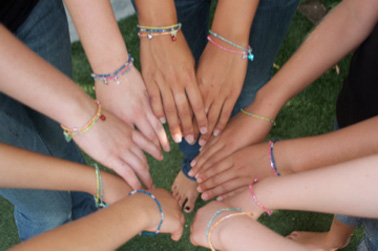
The Leakey Collection is company who not only create environmentally sustainable jewelry but also provides jobs for 1200 Maasai people from the Rift Valley in Kenya. To create their cool friendship bracelets, they use fallen dead wood and grass. Harvesting the grass works to preserve the wetlands by making room for the plentiful grass that cattle eat.
Their new product, two identical ZuluSport bracelets, are connected with a raffia tie that friends cut together and make a wish! What a cool way to show how much you care about your BFF, and the world!
Labels:
green gift guide,
green planet,
sustainable products
Subscribe to:
Posts (Atom)
Search This Blog
- About (5)
- activities (33)
- art (2)
- backyard habitat (10)
- carbon emissions (21)
- classroom projects (12)
- CO2 (6)
- compost (9)
- conservation (10)
- conserving water (4)
- crafts (11)
- energy (7)
- Games (8)
- gardens (7)
- get involved (40)
- global warming (33)
- green bodies (8)
- green gift guide (12)
- green home (18)
- green kids (25)
- green planet (10)
- habitats (11)
- Introduction (1)
- kids and the environment (22)
- planting trees (3)
- play (4)
- recycling (12)
- solutions (37)
- sustainable products (7)
- teaching green (48)
- technology (2)
- toxic chemicals (1)
- transportation (1)
- what? (6)
- wildlife (17)
Links for Kids
Links for Parents
- alliesanswers.com
- bestgreenblogs.com
- blog.greenzer.com
- eartheasy.com
- ecofriend.org
- environmentaldefense.org
- globalwarmingkids.net
- Green Providers Directory
- greenbrooklyn.com
- greenmoms.ivillage.com
- greenstylemom.blogspot.com
- Little Green Blog
- petiteplanet.blogspot.com
- thegreenguide.com
- thegreenists.com
- treehugger.com
- Women's Voices for the Earth
- www.eartheasy.com